Menu
Strengthening Clinical Judgment Through Case-Based Learning at Nurses International
Around the world, communities are facing a growing health crisis, and it is not only about disease. It is about the workforce.
The global nursing workforce has grown in recent years, from 27.9 million in 2018 to 29.8 million in 2023. Yet this progress masks a deeper issue: inequity. Nearly 78% of the world’s nurses are concentrated in countries that represent just 49% of the global population, leaving vast regions underserved (World Health Organization, 2025). In many low- and middle-income countries, a single nurse may serve thousands of people. Clinics are understaffed. Hospitals are overwhelmed. Preventable conditions go untreated.
The obvious response is: train more nurses.
But the deeper solution is this: we must transform how nurses are educated.
More Seats Alone Won’t Solve the Problem
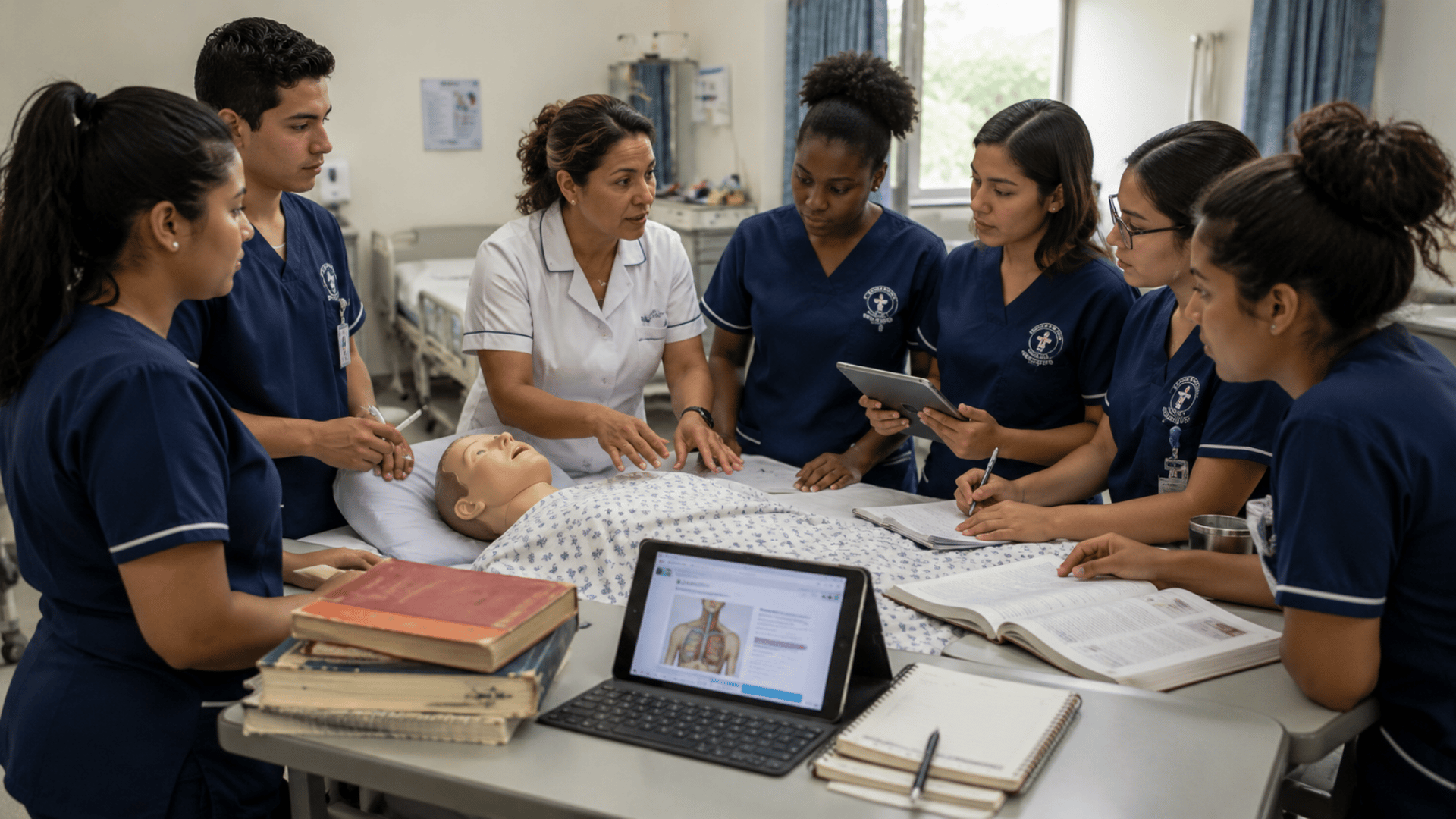
Expanding enrollment without addressing curriculum quality, accessibility, and sustainability risks producing graduates who are underprepared for the realities they face. In many settings, nursing education still relies on outdated materials, limited faculty development, and content that is not aligned with local health priorities.
Meanwhile, population growth often outpaces workforce gains, and in some countries, newly trained nurses are not fully integrated into the health system due to limited employment opportunities (World Health Organization, 2025).
If we want lasting impact, nursing education must be:
- Affordable
- Context-specific
- Technologically accessible
- Designed for real-world resource limitations
This is where innovation becomes essential.
Curriculum as a Force Multiplier
At Nurses International, we believe curriculum is not just academic content—it is infrastructure.
A well-designed, technology-enabled curriculum can:
- Standardize quality across regions
- Expand access through digital delivery
- Reduce reliance on costly textbooks
- Strengthen critical thinking, not just task-based learning
When curriculum is built for scalability and sustainability, it multiplies impact. One curriculum can support thousands of students. One trained educator can extend knowledge to hundreds more.
This approach directly aligns with global priorities to strengthen domestic education systems, expand workforce capacity, and harness digital technologies to improve health outcomes (World Health Organization, 2025).
Empowering Nurses to Change Their World
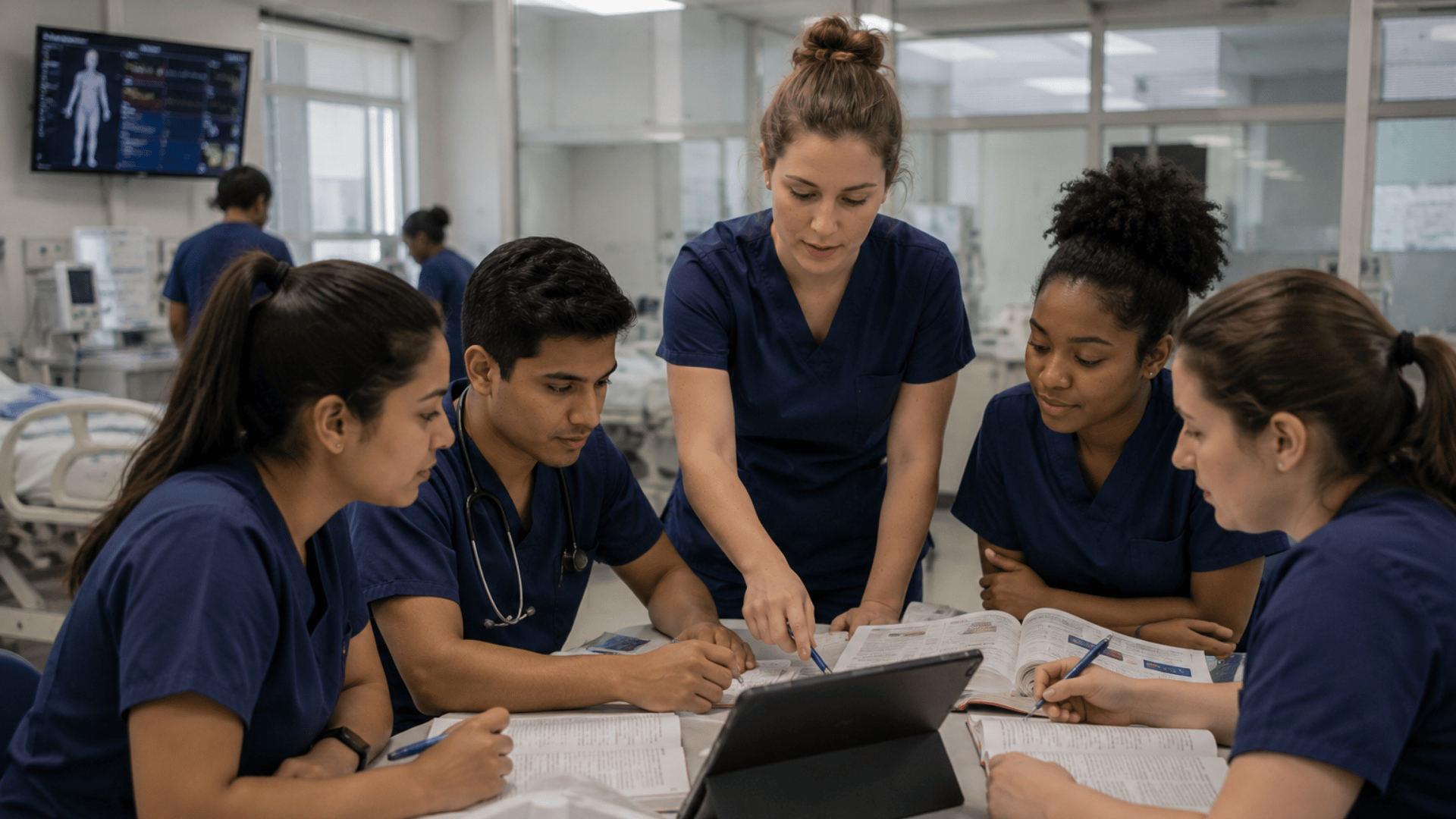
Our mission is clear: Nurses International creates affordable, technologically savvy nursing curriculum for developing countries and supports nurses to improve health in their communities.
That transformation begins in education.
When nurses are trained to assess, analyze, lead, and advocate, they become more than healthcare providers. They become:
- Community educators
- Public health leaders
- Patient advocates
- Agents of systemic change
Strengthening global health starts with strengthening the educational foundation.
One person.
One nurse.
One community at a time.
Looking Ahead
The path forward is clear: improving global health begins with strengthening nursing education.
At Nurses International, this belief continues to guide our work as we develop curriculum designed for scale, accessibility, and real-world impact.
Meaningful change starts with how nurses are prepared and carries forward into every community they serve.
References
- World Health Organization. (2025). Nursing workforce grows, but inequities threaten global health goals. https://www.who.int/news/item/12-05-2025-nursing-workforce-grows–but-inequities-threaten-global-health-goals
- World Health Organization. (2025). State of the World’s Nursing 2025. https://iris.who.int/server/api/core/bitstreams/a4173924-a18f-49b6-8bd1-9c2a4a098980/content
Authors: Jade Apparicio, Samantha Baboolal
Nurses International is a non-profit entirely focused on helping nurses obtain the education and the support they need to make a difference in developing nations worldwide.
We connect colleges and institutions with experts who can take their nursing programs to the next level. We help establish new nursing programs where they’re needed most. And we eliminate the barriers that stand between students and education.
QUICK LINKS
CONTACT US
FOLLOW US
Nurses International is a registered 501(c)3 nonprofit.
EIN: 46-4502500
EIN: 46-4502500